From the Field, News
Monday, August 25, 2025
Quality Through Collaboration: Uganda’s Specialty Coffee Project
By building resilient, long-term relationships with coffee producers in Uganda, and introducing different processing methods, UGACOF is laying the foundation to bring more high-quality East African coffees to our customers.

Sucafina in Uganda (UGACOF), our sister company, is bringing Ugandan Arabica coffee into the spotlight. Uganda’s Arabica production rivals the combined output of Rwanda and Kenya, sharing similar soils, varieties and elevations. Nonetheless, until recently, Uganda has been traditionally known for DRUGAR (Dry Ugandan Arabica), a relatively low-input, undifferentiated coffee product. The key factors in expanding the country’s offerings? Attention to value addition and to improved handling and processing.
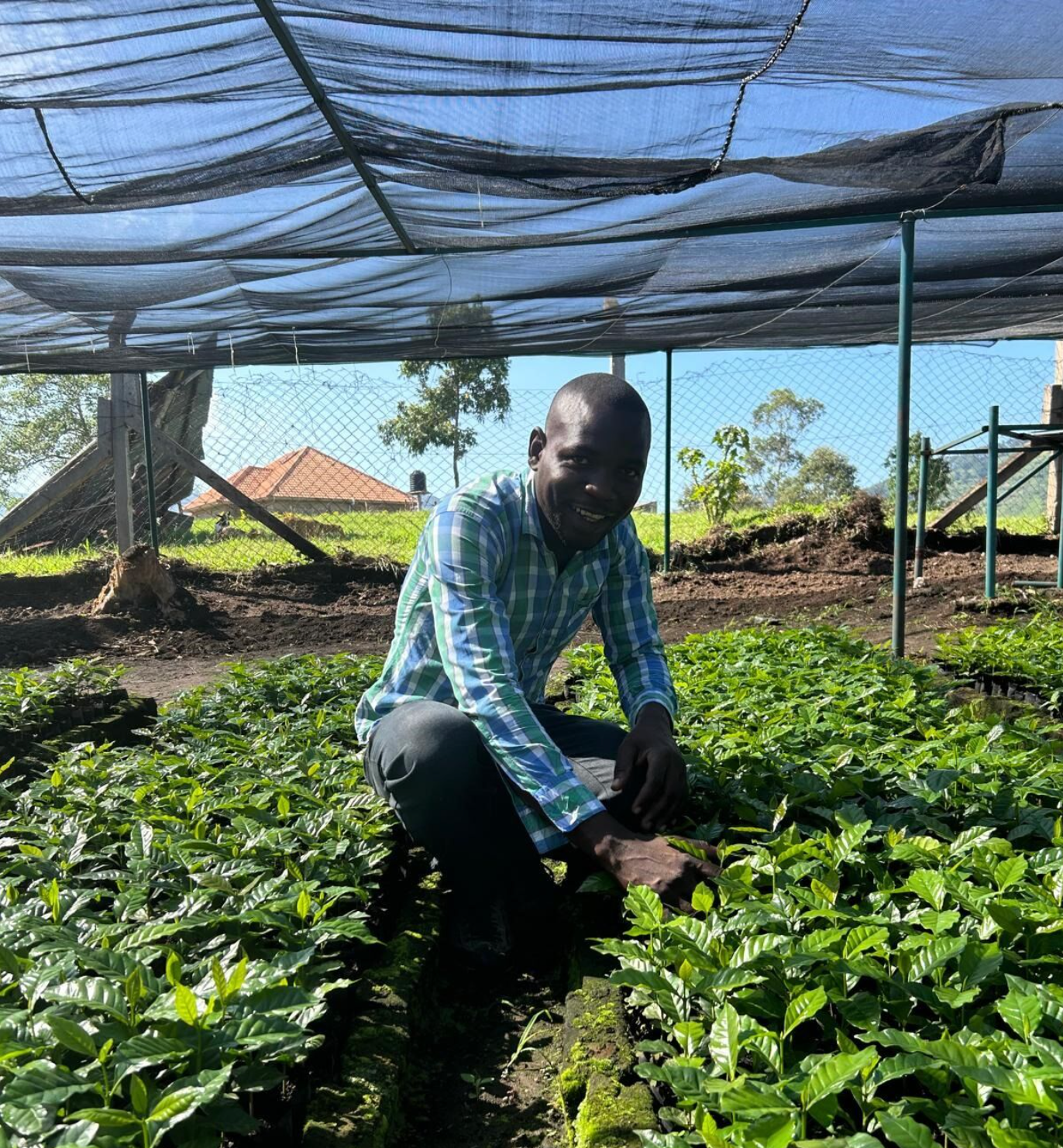
To explore the potential of Ugandan specialty coffee, we launched a collaborative project in Western Uganda during March and April 2025. The goal was to develop a consistent, high-quality profile that adds value to the region’s coffee and to create opportunities for the over 4,000 farmers who deliver cherry to Ugacof’s washing stations. This approach includes tailored training and sustainability initiatives that can boost production and attract direct buyers.
Anička Marková, Green Coffee Merchant at Sucafina NV, worked closely with the UGACOF team at our washing stations to design experimental processing methods aligned with the project’s goals.
“The objective was to create a consistent profile by establishing standard operating procedures (SOPs) and achieving a clean, juicy cup that meets specialty market demands,” Anička explains. “Through collaboration and knowledge sharing, we achieved consistency across batches and uniformity in the cup.”
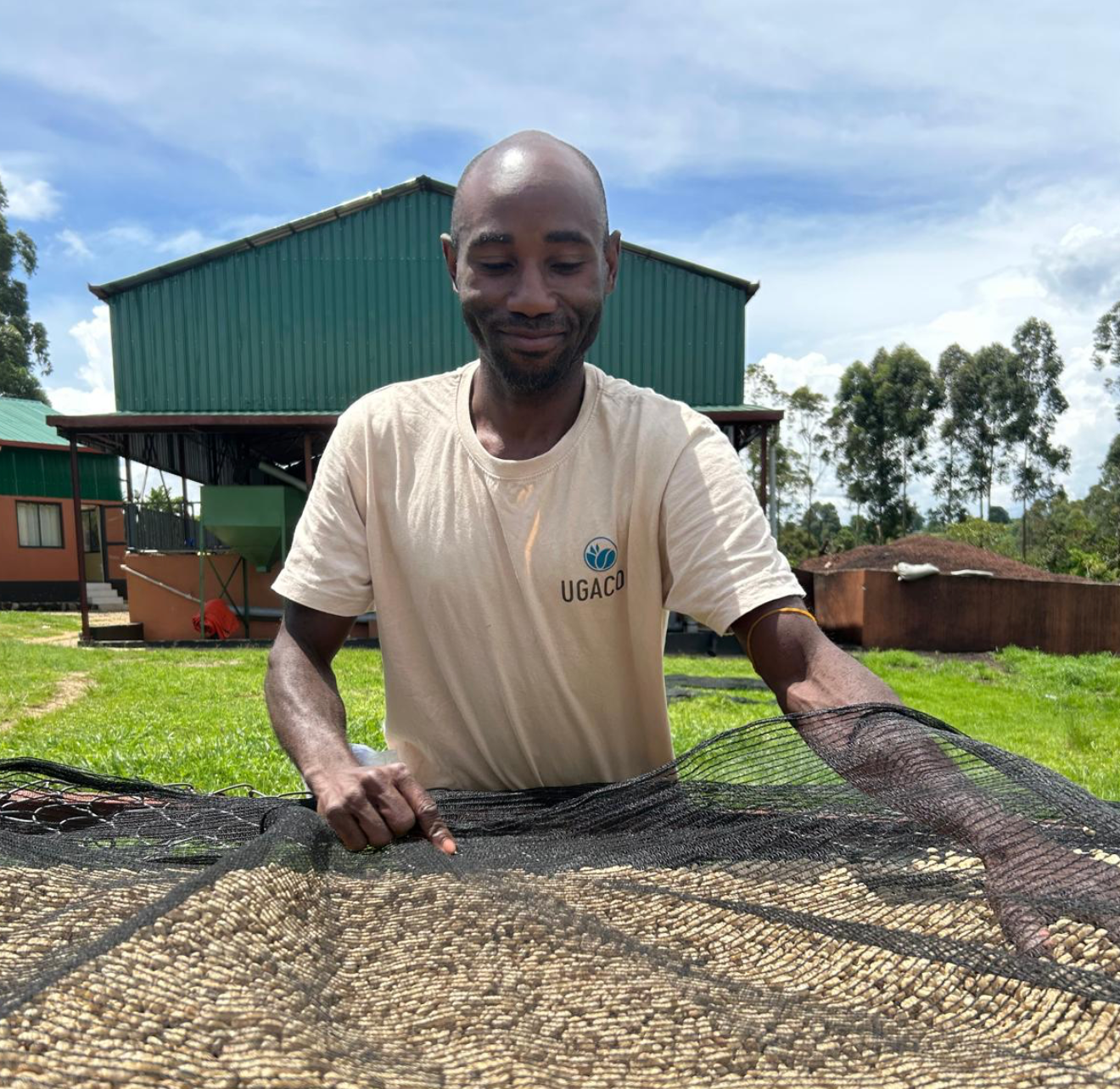
She also collaborated with the team to identify opportunities for farmers in the area. “Farmers appreciated the recognition they received from UGACOF,” says Edson Muhindo, Coffee Washing Station Supervisor. He adds, “The specialty project is excellent, and I hope it continues. It’s a valuable learning opportunity for farmers and the sourcing team, who can spread knowledge in the field.”
Why Specialty Coffee in Western Uganda?
Specialty projects in this region offer farmers access to markets and sustainability initiatives that can increase both productivity and income. Thanks to UGACOF’s strong reputation and the strategic location of our partner farms, these lots benefit from consistent production and innovative agricultural practices.
This approach also had a positive impact on the team: “It was truly amazing to work with Anička over the two-month period during which we successfully launched this Arabica specialty project,” says Geofrey Sande Wogube, Arabica Production Supervisor at UGACOF.
For the project, Anička and the team focused on four distinct processing methods designed to highlight different cup profiles:
- Natural: Heavy-bodied cup with rich aromatics and berry notes.
- Anaerobic Natural: Winey and exotic flavors.
- Yeast-Inoculated FW: Floral brightness with stone fruit and tangerine.
- Lactic Fermentation FW: Enhanced texture and a lingering finish with delicious berry notes.
Where Did the Project Take Place?
“We selected two washing stations in Western Uganda: Mubuku and Bunyangabu,” Anička explains.
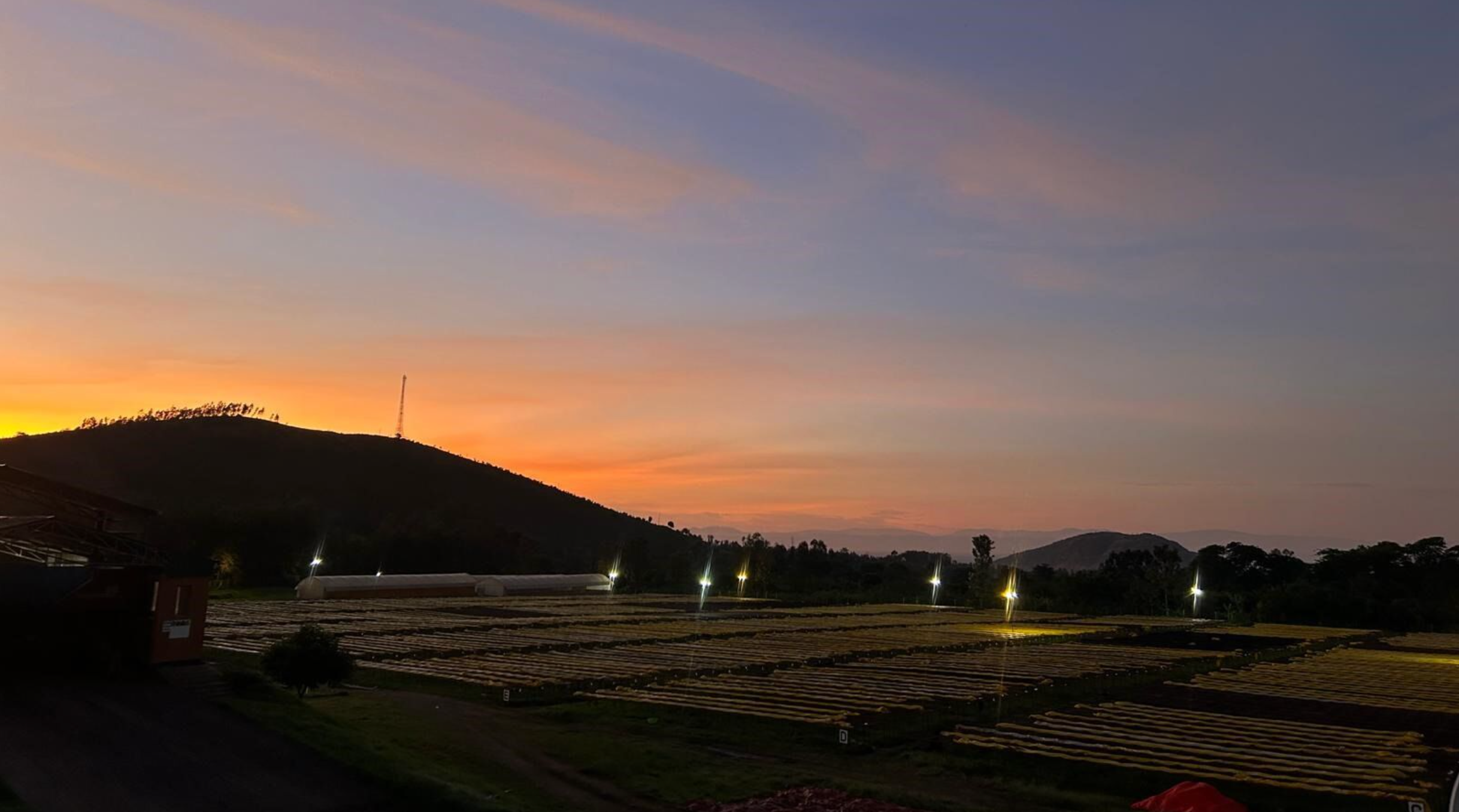
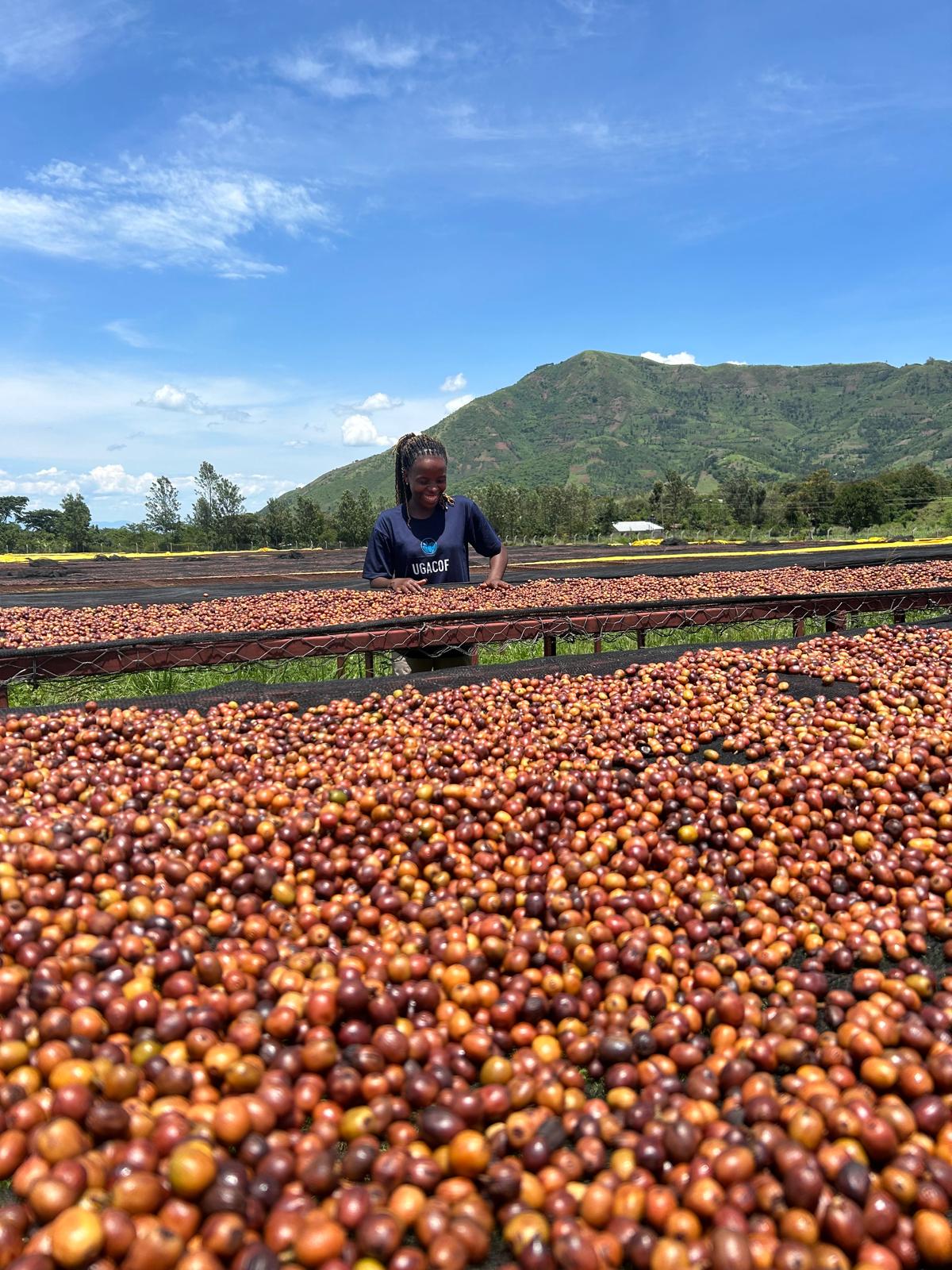
Mubuku, with its hotter, drier climate and lower humidity, was ideal for Natural and Anaerobic Natural processing. Its on-site quality control lab made it perfect for experimenting with anaerobic methods, ensuring even drying and consistent quality.
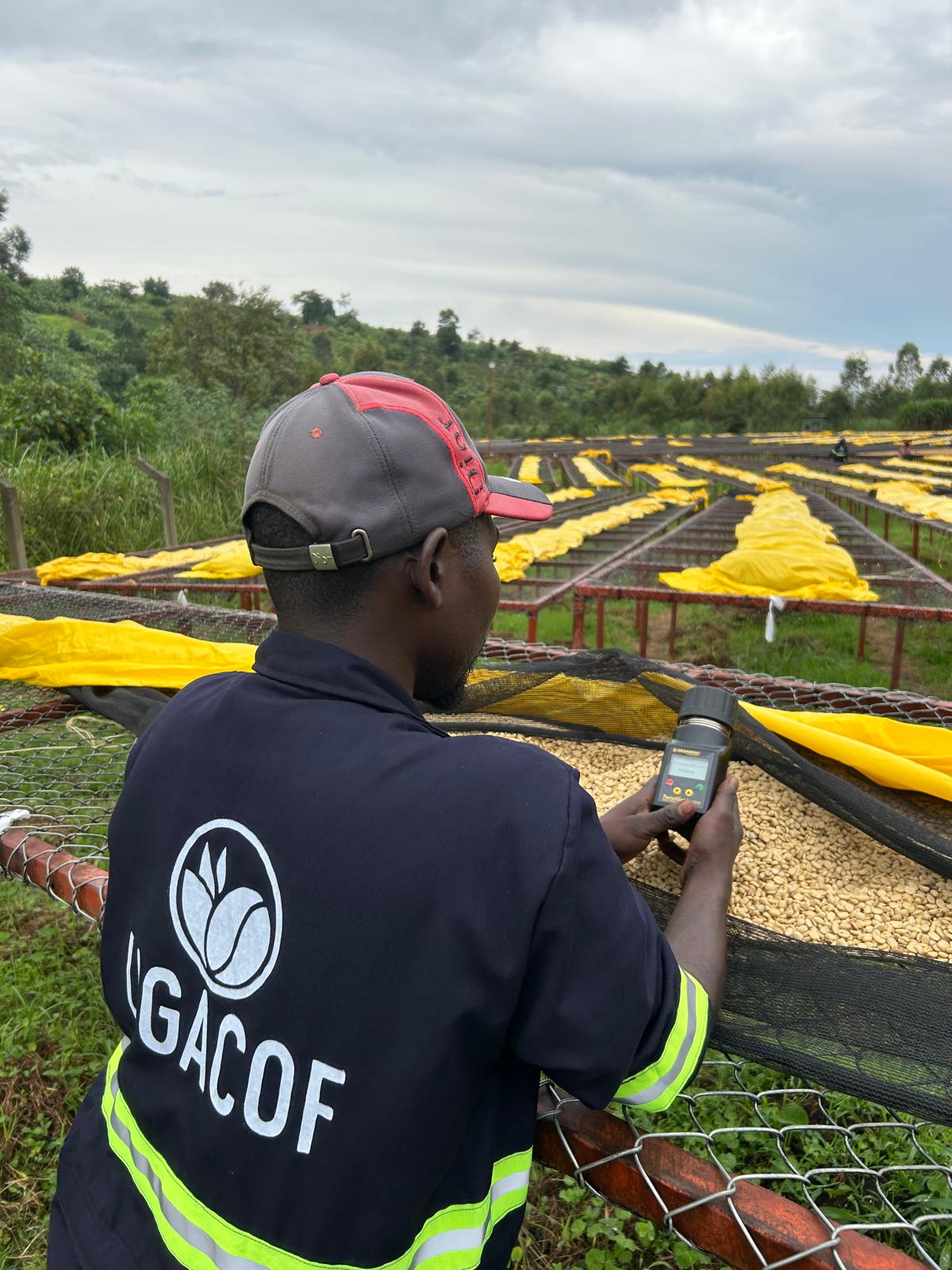
Bunyangabu, located near the Congolese border at a higher elevation, offered cooler, more humid conditions – ideal for washed processes. Its well-equipped facilities and steady cherry supply made it a strong hub for extended fermentation.
“During the two-month period, we designed a new product line at these stations, which had previously focused mostly on commercial-grade coffee,” Anička adds. “I would call it a pilot, as we started on a small scale to explore the potential of each method.”
The team developed several batches targeting a cup score of 84+ points. After processing, samples were sent to destination offices for evaluation by QC teams. These insights are crucial for scaling up in future harvests.
Overcoming Challenges
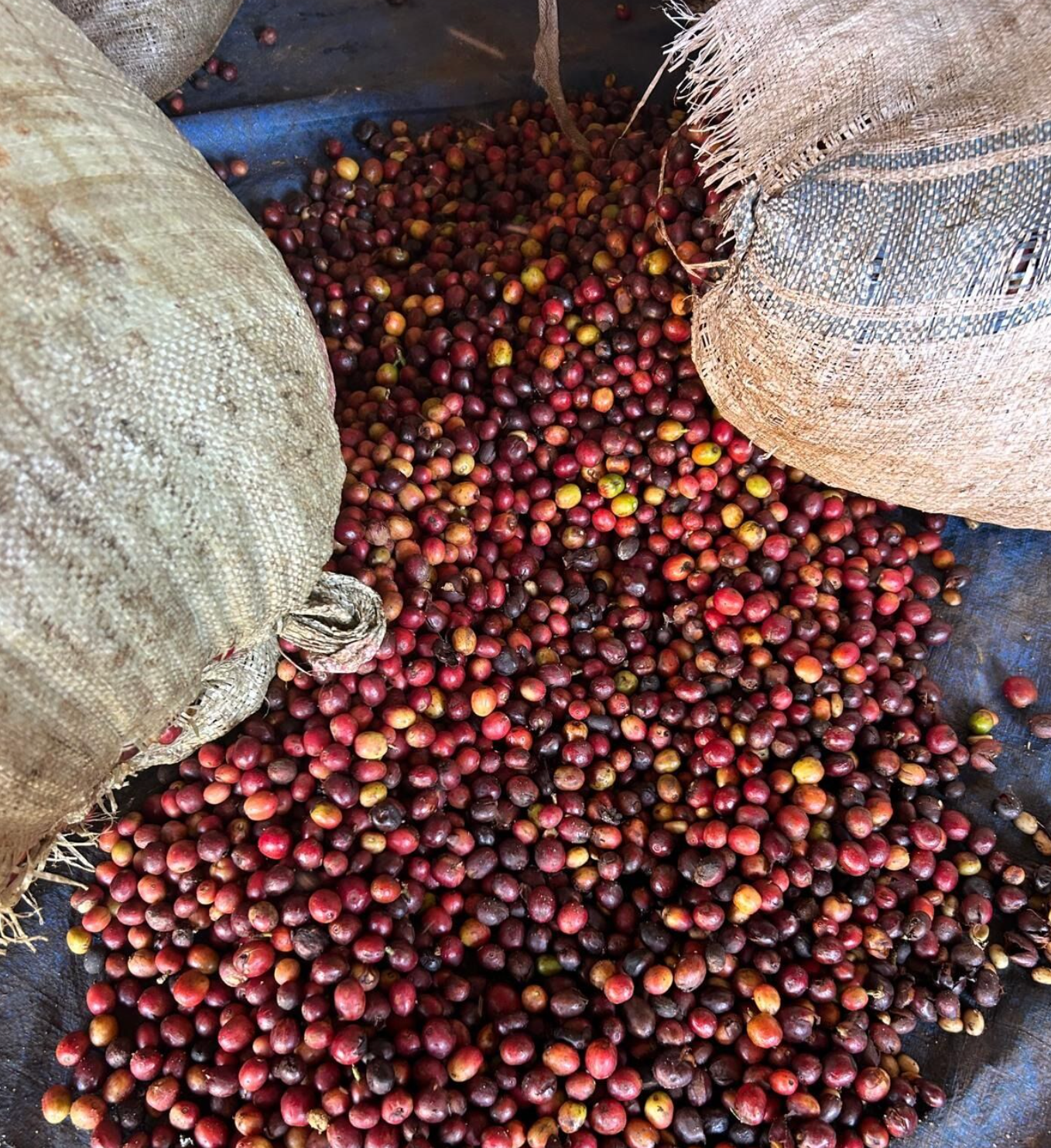
One of the main challenges was cherry quality. In a region traditionally focused on commercial grades, farmers often deliver cherries at varying stages of ripeness. This variability posed a significant hurdle for specialty production.
“As we intend to increase the volumes of specialty coffee to match the growing market demand, there’s an urgent need to establish a reliable specialty supply chain – farmers who can deliver floated and sorted red ripe cherries ready for pulping and fermentation,” explains Geofrey. “This would help ease the strain of sorting at the station, particularly under challenging weather circumstances.”
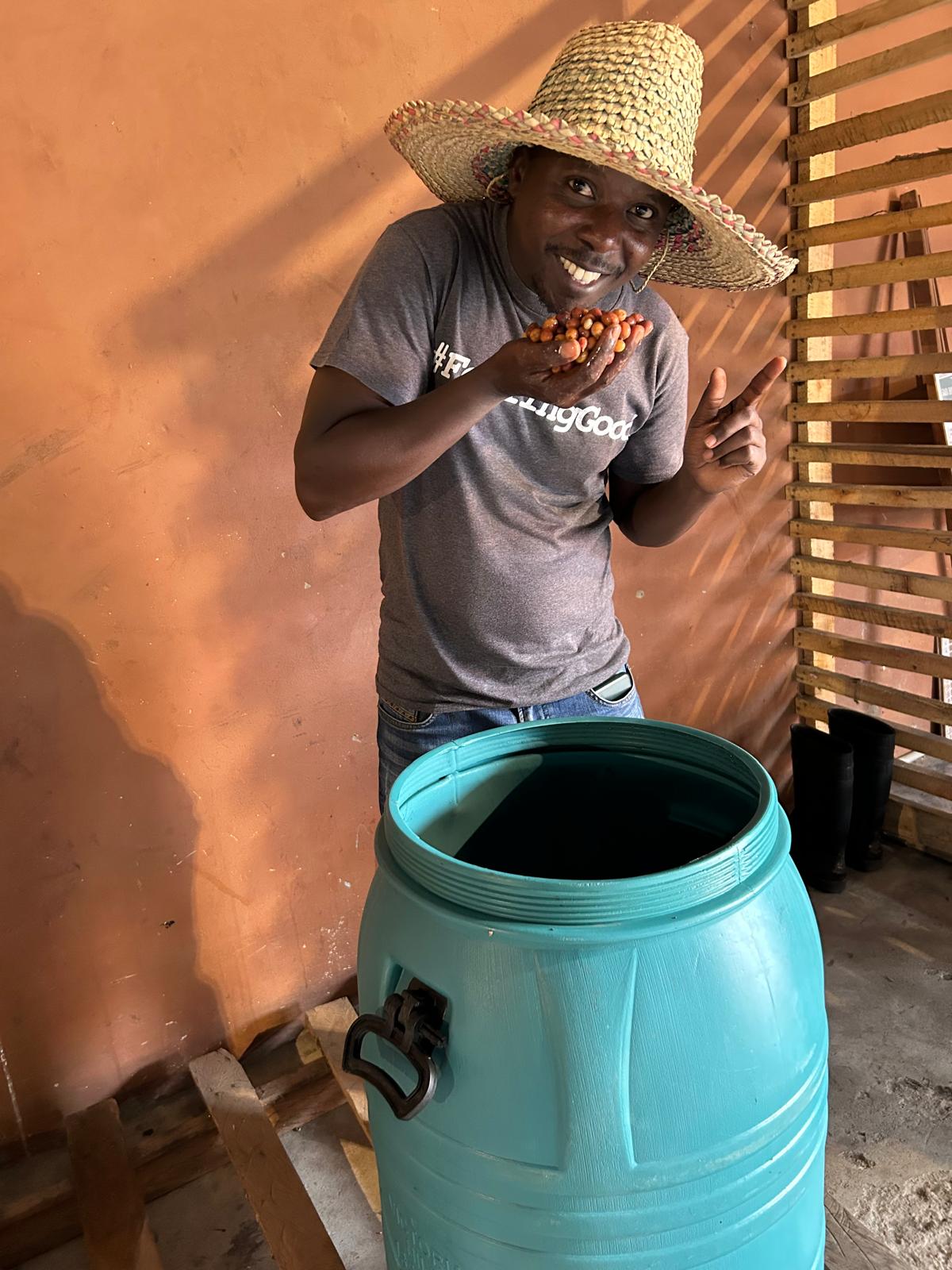
Despite these challenges, the team maintained a strong focus on quality and consistency. After purchasing cherries, the first step was flotation to remove under- and overripe cherries. Then, specially trained staff visually inspected the remaining cherries to eliminate defects.
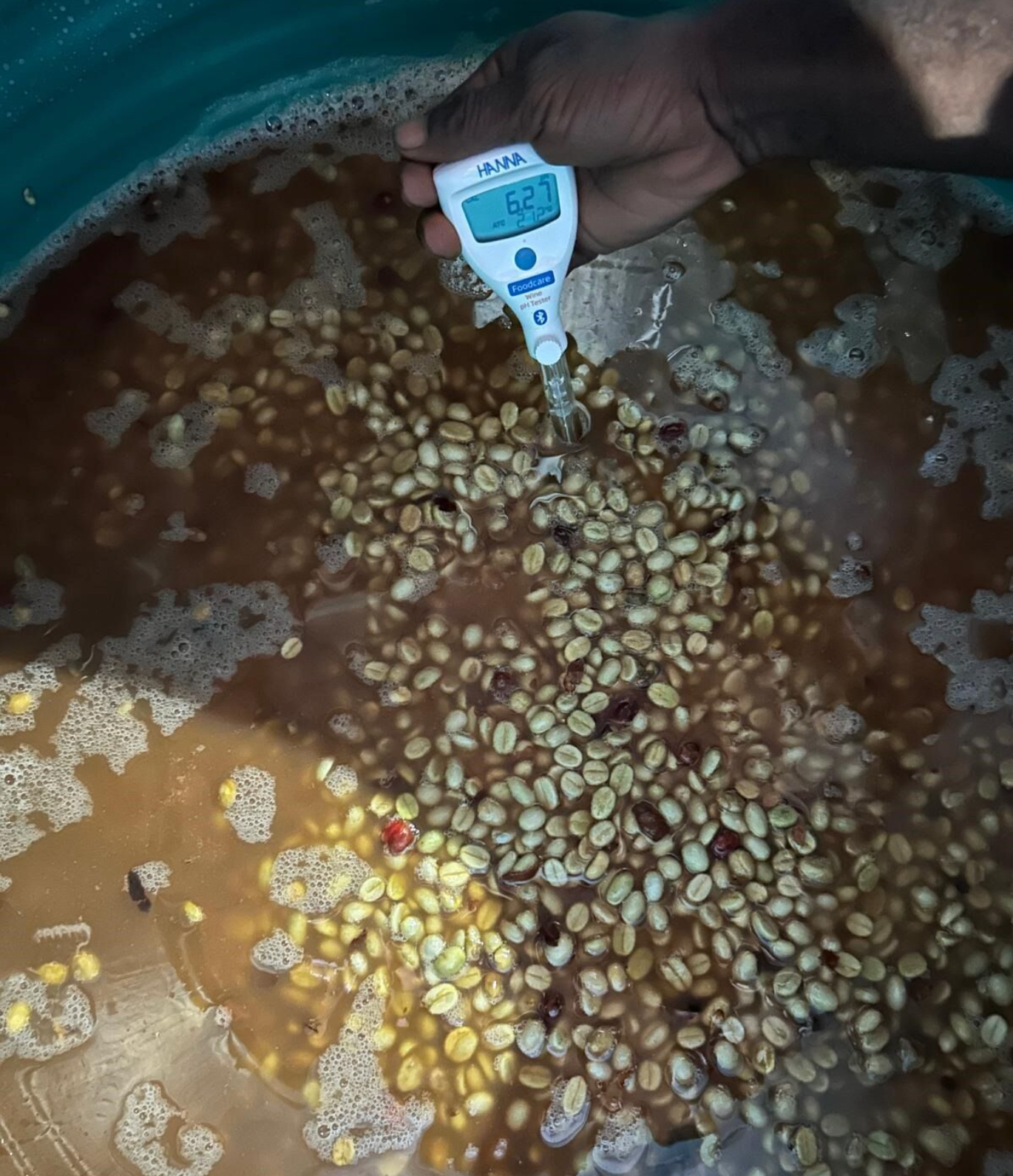
During fermentation, Anička and the team closely monitored environmental conditions, including temperature and pH levels. Working with uniformly ripe cherries in a controlled environment helped avoid defects like overfermentation and ensured better cup quality.
The results were promising: juicy, expressive coffees with solid cup scores.
“We couldn’t be more excited to share this coffee,” Anička says.
Looking Ahead
UGACOF is committed to supporting farmer resilience by improving quality, which translates into better opportunities for producers. Plans are underway to establish a large nursery and launch a farm management program to increase productivity and yield.
Additionally, UGACOF is looking ahead to expand the pilot project. “To support scaling efforts, we decided to acquire a cherry color sorter,” explains Loic Dugast, Arabica Supply Chain Coordinator. “This investment will enhance uniformity and consistency in quality while enabling increased volume.”
“I think there’s so much potential here,” Anička reflects. “The teams are ready to go the extra mile. Working with the staff at Bunyangabu, for example, was amazing. I collaborated closely with the washing station manager, and together we improved data collection and measurement. This helped us create a solid baseline for fermentation and post-harvest processes.”
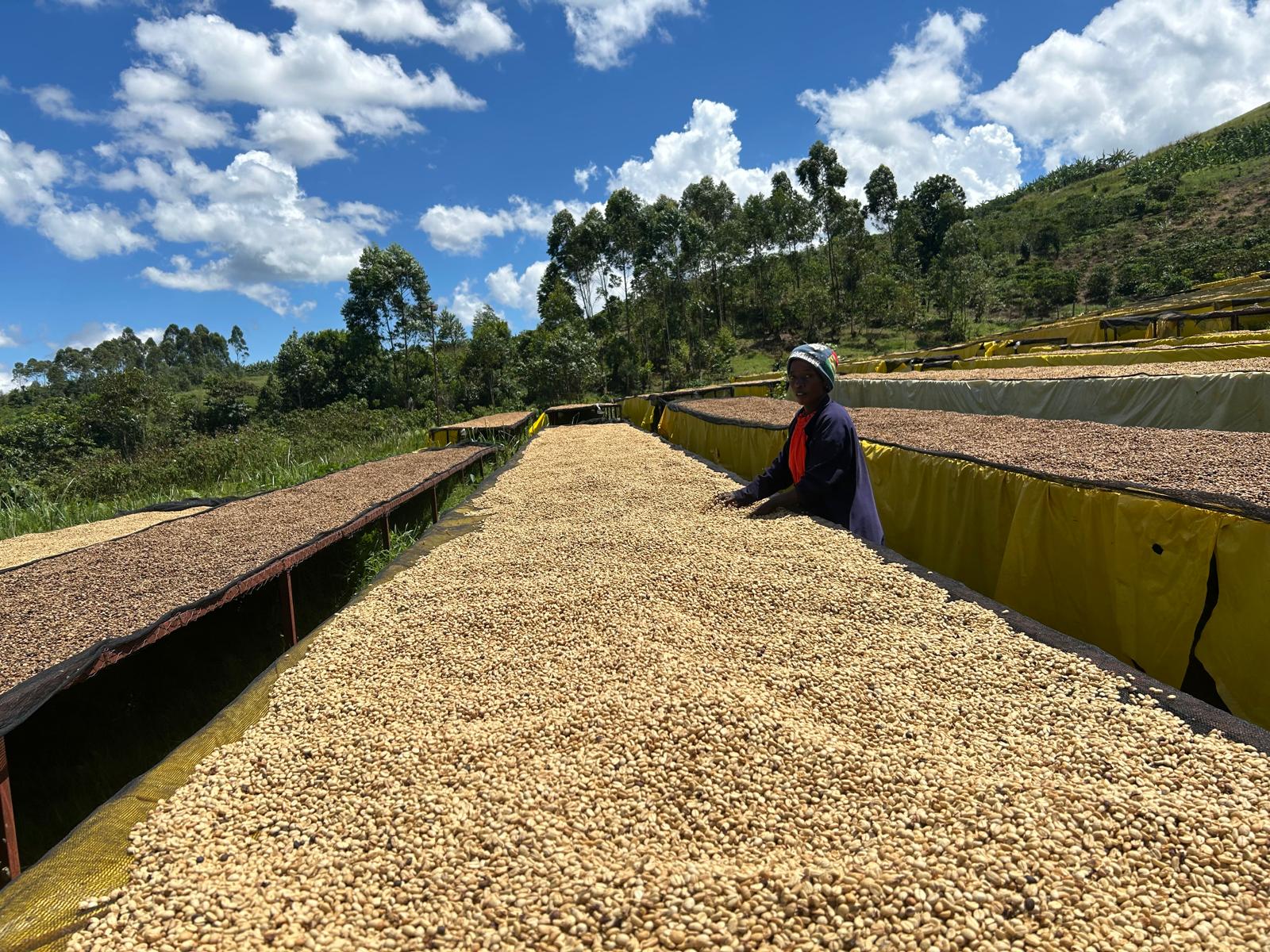
“This project taught me how to process specialty coffee, how to select only red ripe cherries for better quality and how well-sorted cherries can produce great aromas after roasting,” adds Edson. “I also learned how to master fermentation to achieve excellent results.”
In the end, that’s exactly what we need: passion, knowledge and support for all the people who make our daily cup of coffee possible.
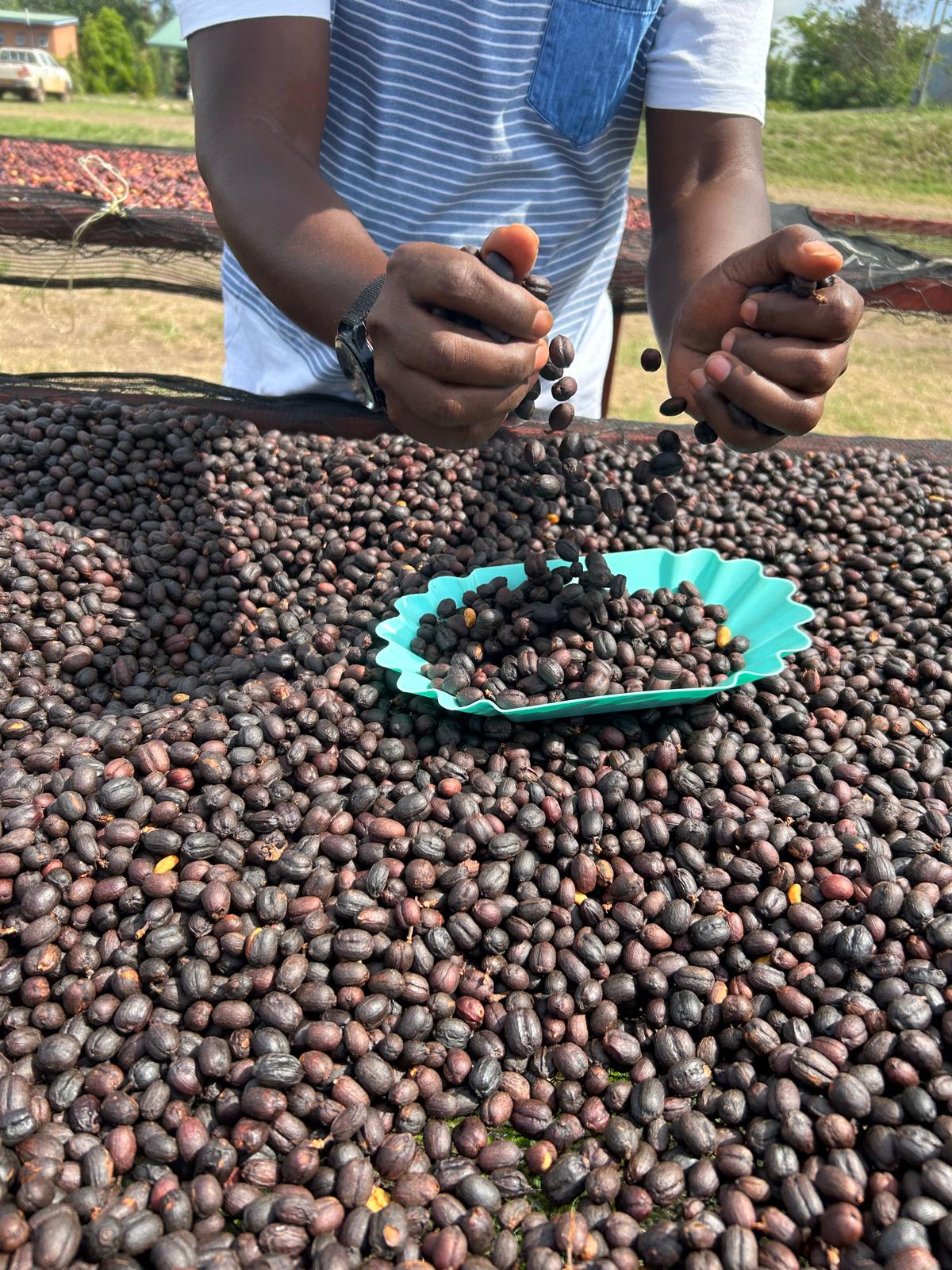
The potential for specialty coffee in Uganda is strong, and this project marks an exciting step forward. We can’t wait to see where it leads next.
Uganda’s main Arabica harvest is kicking off now, and these unique specialty-processed lots are only available by pre-order. If you’d like to secure some, get in touch with your usual contact soon so we can lock in your request.
Have a look at the lots coming from Uganda
| Sucafina: Mubuku Anaerobic Natural | Sucafina: Bunyangabu Oro Yeast FW | Sucafina: Bunyangabu Lactic fermentation FW |