Indonesia - Beyond Flagship: The Paydirt Project
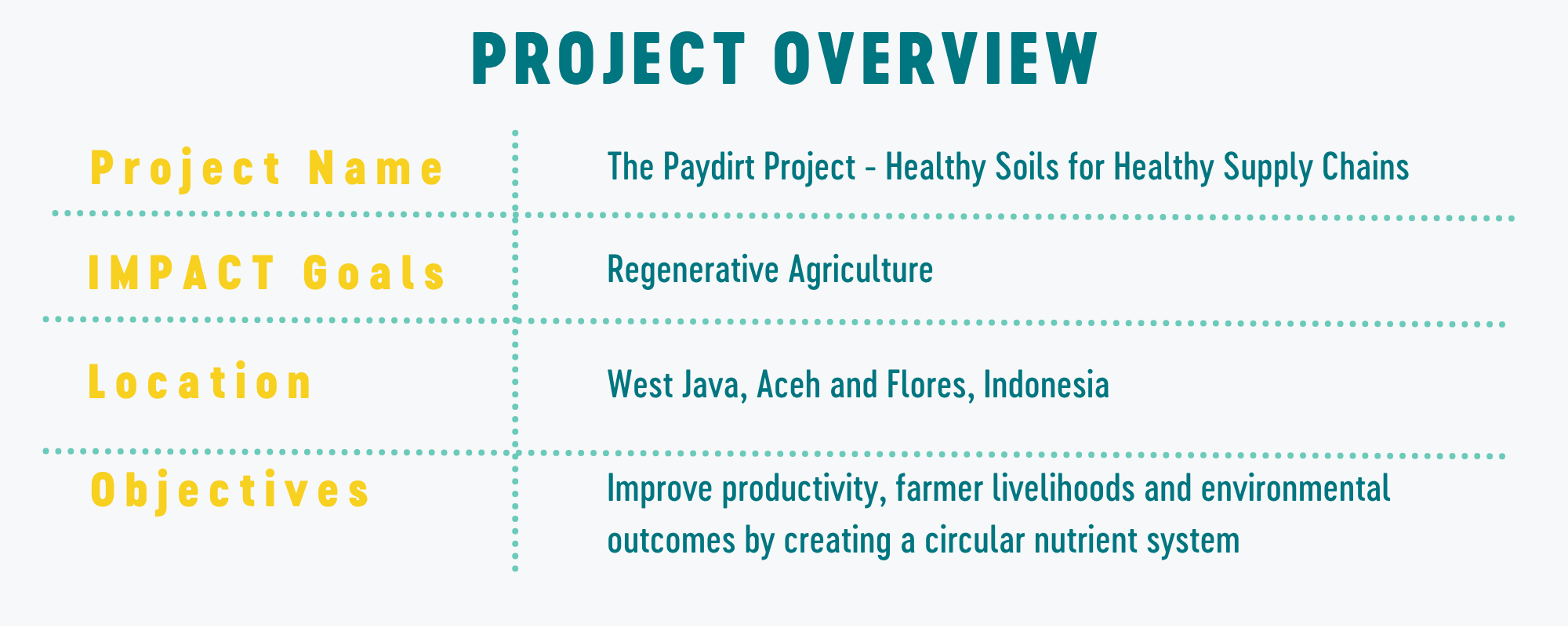
Healthy soils lie at the heart of healthy coffee farms. By purchasing selected lots from Indonesia, you can support our IMPACT Beyond Flagship: The Paydirt Project - Healthy Soils for Healthy Supply Chains in Indonesia. The project turns coffee processing waste into compost, improves soil health and equips farmers with practical regenerative agriculture practices aimed at increasing productivity and yields in the long-term. The project brings together coffee processing and farm-level practices to create a more circular approach to coffee production. Working across West Java, Aceh and Flores, it will support up to 600 farmers across approximately 444 hectares to improve their soil ensure yields that support better outcomes for coffee farming communities
Healthy soils lie at the heart of healthy coffee farms. By purchasing selected lots from Indonesia, you can support our IMPACT Beyond Flagship: The Paydirt Project - Healthy Soils for Healthy Supply Chains in Indonesia. The project turns coffee processing waste into compost, improves soil health and equips farmers with practical regenerative agriculture practices aimed at increasing productivity and yields in the long-term.
The project brings together coffee processing and farm-level practices to create a more circular approach to coffee production. Working across West Java, Aceh and Flores, it will support up to 600 farmers across approximately 444 hectares to improve their soil ensure yields that support better outcomes for coffee farming communities

Introduction
The Paydirt Project focuses on two closely connected challenges: coffee waste and declining soil health. By addressing both, this regenerative agriculture project aims to improve productivity, farmer livelihoods and environmental outcomes.
Composting can give coffee pulp a second life while adding organic matter to the soil. This can improve water retention, support microbial activity, improve soil structure and help buffer soil acidity. For perennial crops like coffee, these improvements can also contribute to greater resilience during periods of drought and changing weather.
The Paydirt project is built around a circular approach: coffee waste leaves washing stations and returns to farms as a productive input. Rather than relying entirely on external inputs, farmers can make use of nutrients already present within the supply chain.
Funded through a premium applied to select coffee purchases, the project enables direct investment into your supply chain, advancing sustainability initiatives that align with IMPACT Goals.
The Rationale
For every metric ton of coffee cherry processed, approximately 600 kg of waste is created. Coffee pulp can accumulate in dumping areas and potentially contaminate surrounding soil and water sources as it decomposes. At the same time, many coffee-growing regions in West Java, Aceh and Flores face low soil organic matter, soil acidity, poor nutrient availability and rising fertilizer costs. These factors pose risks to farm yields and livelihood acquisition.
Healthy soils are essential for productive coffee farms, but maintaining soil health can be difficult when farmers face rising input costs, extreme weather and limited access to regenerative agriculture knowledge.
The Paydirt Project looks at how one challenge can help address the other. Rather than treating pulp as waste, the project turns it into compost and returns it to the farms where the coffee was produced. This creates a circular nutrient system that puts coffee waste back into the supply chain while improving soil health and potentially reducing input costs for farmers.
Project Components
- Compost Production and Waste Valorization: Coffee pulp, parchment skin and other dry materials from farms and farmyards are converted into compost at three pilot sites in West Java, Aceh and Flores. The project uses low-cost, low-labor passive aeration systems, allowing natural convection to aerate compost windrows while reducing the need for intensive labor
- Soil Health and Productivity: Finished compost is returned to participating farmers and used alongside other inputs according to local soil needs. Compost, lime and fertilizer are applied according to regional requirements
- Regenerative Agriculture Demonstration Plots: The project establishes demonstration plots at each pilot site. Sucafina’s agronomy team support farmers in applying practices such as canopy management, improved nutrition, appropriate spacing and intercropping. The goal is to make the benefits visible, practical and repeatable, ensuring long-term scalability
How It Works
The project closes a loop between coffee processing and coffee farms.
1. Coffee cherry arrives at the washing station
Participating producers sell cherry to washing stations. During pulping, the coffee bean is separated from the pulp, creating a significant volume of organic waste.
2. Coffee pulp goes to the compost yard
Instead of being left in a dumping area, the pulp is moved to a composting site next to the washing station. Composting trials will identify the most effective compost recipe.
3. Compost returns to the farms
Once the compost is ready, typically after 4–5 months, it is distributed to participating farmers according to the amount of cherry they contributed. The indicative allocation is one 30 kg bag of dried compost for every 100 kg of cherry delivered, subject to compost-yard capacity.
4. Demonstration plots show the results
Compost is applied alongside synthetic fertilizer and regenerative farming practices on demonstration plots. The project tracks results, application costs and return on investment, giving farmers a chance to see how these practices perform under real farm conditions.
Outcomes & Impact
The Paydirt Project aims to:
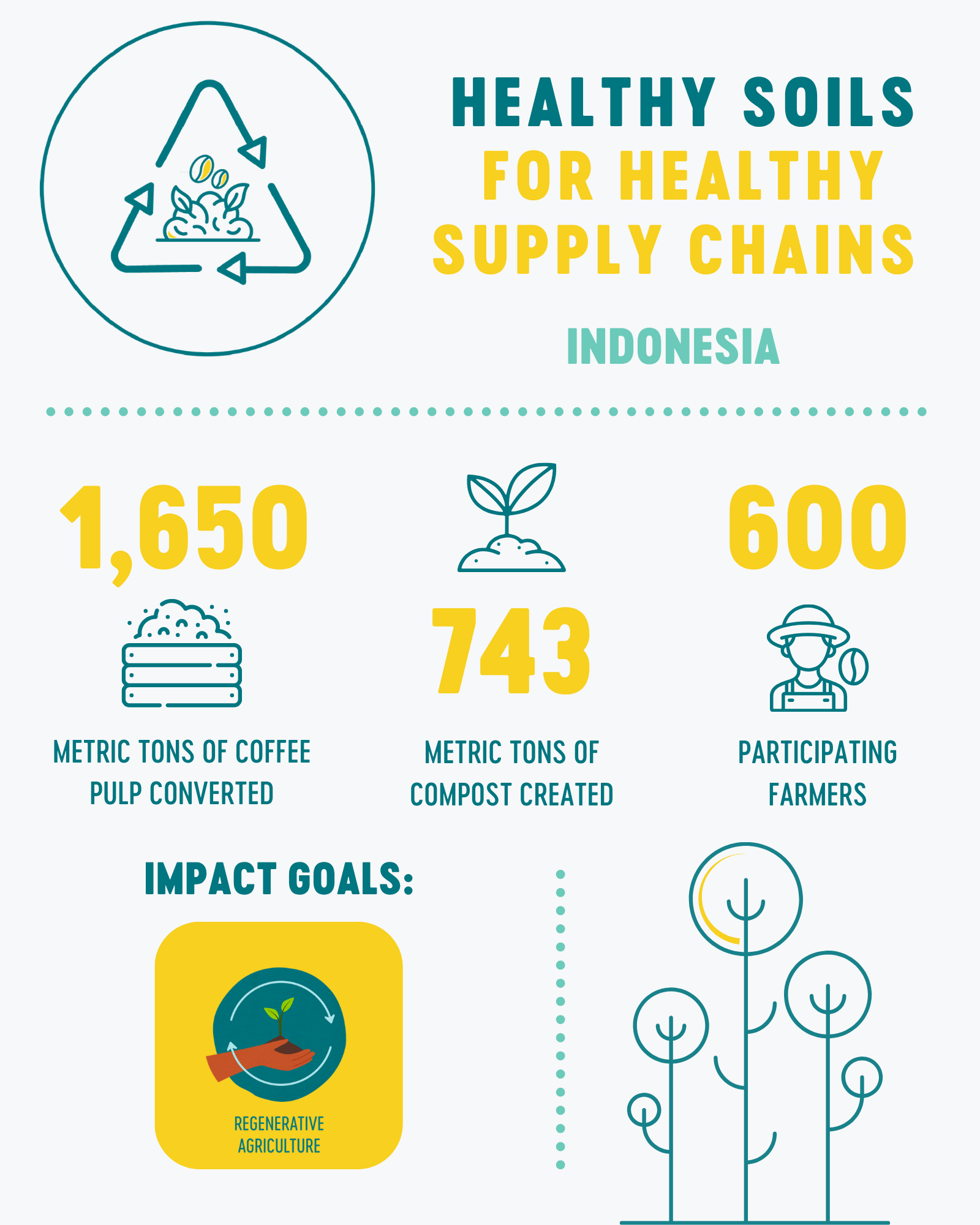
- Reach up to 600 farmers across approximately 444 hectares
- Convert up to 1,650 metric tons of coffee pulp waste into approximately 743 metric tons of compost each year
- Produce compost at around USD 0.03/kg, providing a low-cost source of nutrients and helping farmers reduce their reliance on purchased fertilizer
- Use demonstration plots to train farmers in other regenerative agriculture methods and illustrate the benefits firsthand, encouraging continued adoption of these practices beyond 2030
About Beyond Flagship projects
Beyond Flagship Projects are initiatives linked to IMPACT-verified farmer groups within Sucafina’s direct supply chains. These projects give partners a flexible way to support IMPACT goals, create measurable impact and drive meaningful change at contribution levels below the typical minimum threshold for full project sponsorship.
Investments are made through a premium and do not need to be tied directly to coffee produced by the project’s participating farmers. Instead, support is Origin-specific. For example, purchasing Beyond Flagship contributing coffees from Indonesia enables investment in Indonesia-based IMPACT Beyond projects. This approach increases flexibility, expands the potential scale of impact and supports more consistent data collection and reporting across supply chains.
In the case of the Paydirt Project, the focus starts at the washing station but ends back on the farm: coffee waste. By turning that waste into compost, returning it to farmers and demonstrating how it can work alongside regenerative agriculture practices, the project aims to build a more circular and productive coffee supply chain.