From the Field, News
Monday, September 15, 2025
Vietnam 2025/26: Harvest Outlook and Sustainability Progress
As the 2025/26 harvest gears up in Vietnam, we reached out to our local team of experts – Thien Le, Research Manager, Thuy Mai, Supply Chain Manager, and Nhu Le, Senior Sustainability Coordinator – to share insights about this year’s production expectations, anticipated challenges and ongoing sustainability efforts.

This Article at a Glance:
- Combined Robusta and Arabica production is currently estimated at 29,649 thousand bags, up 8.3% from last year.
- Harvest timing is expected to mirror last year’s harvest, with Arabica starting mid-September and Robusta mid-October, peaking in early December.
- Sustainability efforts this year focus on farmer training, composting, tree planting, soil sampling and carbon footprint mapping to boost efficiency and cut emissions. We are also developing new RA/4C-certified supply chains in northern Vietnam
Robusta and Arabica Harvest
While it’s still early days, current production expectations (based on crop surveys) for the 2025/26 harvest estimate 29,649 thousand bags, an 8.3% increase compared to last year’s crop. Robusta is estimated at around 28,342k bags (+7.4% YoY) and Arabica at 1,307k bags (+31.3% YoY).
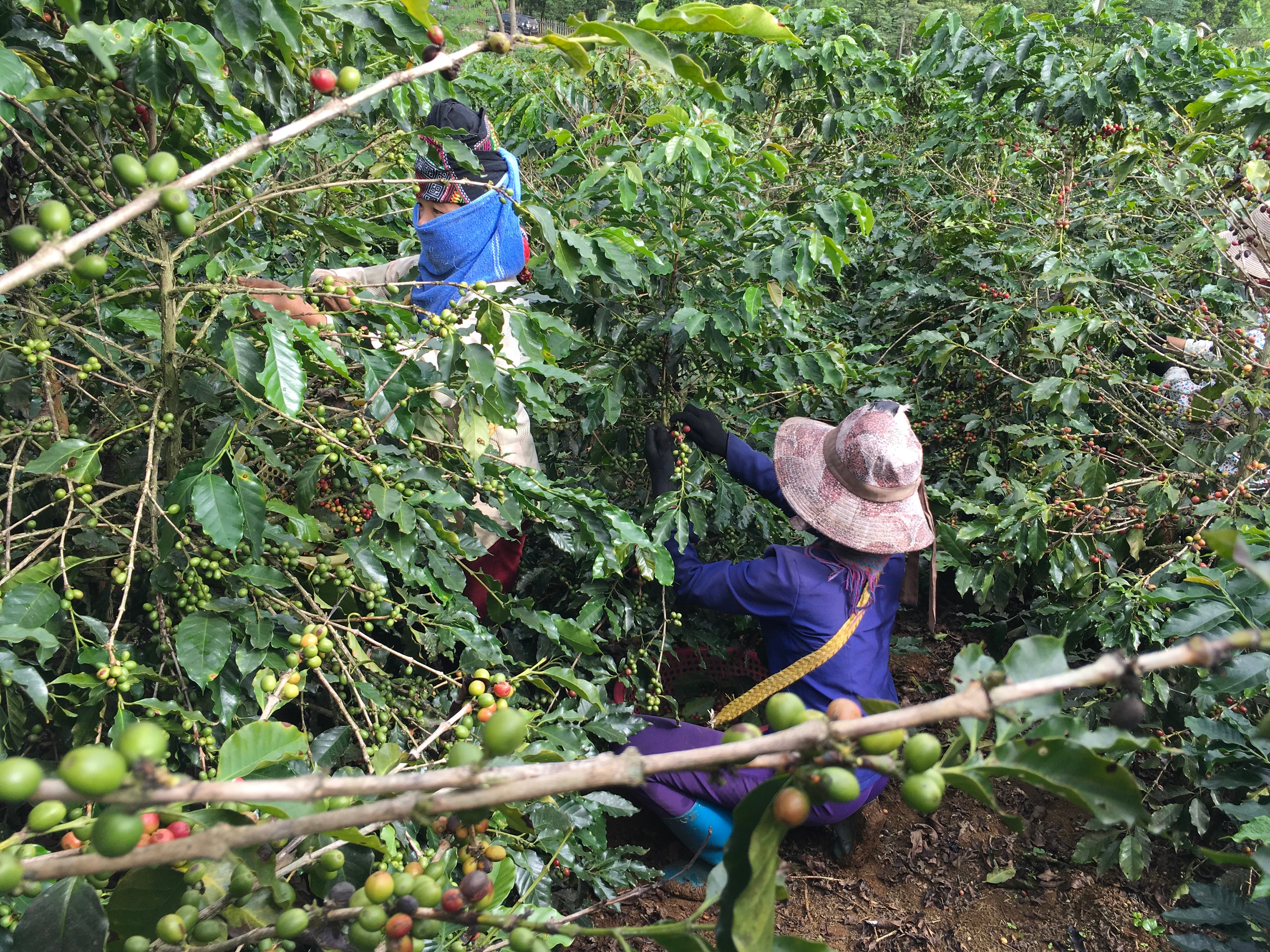
Rainfall is projected to be in line with the historical average, so harvest time is expected to be the same as last year. If weather conditions remain favorable in the coming months, the harvest quality is expected to improve. This is deepened by many farmers converting to organic fertilizer use, as opposed to chemical fertilizers, and increasingly integrating Good Agricultural Practices (GAPs) such as pruning and weeding. All these factors are expected to have a positive impact on cup quality.
For Robusta, specifically, in the fields, farmers are currently applying their third round of fertilizer and carrying out weeding. The crop is developing steadily, with most cherries in the development stage and some beginning to enter maturation.
So far, producers and processors have reported no major challenges. Weather conditions remain favorable, and prices are high – not only for coffee but also for other agricultural products – allowing farmers to benefit from strong returns for the second consecutive crop year. At this stage, there are no significant concerns for the harvest.
The harvest timing is projected to follow the usual pattern:
- Arabica: Starts in mid-September, with the main harvest in November and peaking in early December.
- Robusta: Starts in mid-September, with the main harvest in November and peaking in early December.
- Both harvests are expected to finish by the end of January.
Regulations, Suppliers and Market Context
Two regulatory shifts are shaping the context for this year’s harvest:
- VAT: The Government has applied a 5% Value Added Tax (VAT) on coffee trading. To ensure compliance and fiscal responsibility, we continue working only with trusted suppliers who meet all tax requirements.
- EUDR: The European Union Deforestation Regulation (EUDR) will come into effect on January 1, 2026. While it is not yet active, our supply chains are already preparing for compliance through traceability and farm-level data collection.
Sustainability projects and updates
Our Vietnam team continues to make strong progress on sustainability initiatives that strengthen farm productivity, improve environmental resilience and prepare for future regulations. This includes advancing our IMPACT verification cycles, expanding farmer training and supporting producers with seedlings, tailored fertilizer guidance, and soil and compost initiatives.
Our Vietnam team has been investing significant time and resources into strengthening our IMPACT responsible sourcing supply chain and delivering farmer training. The goals are to ensure compliance with new regulations, improve coffee quality in the mid- to long-term, farm resilience and sustainability outcomes.
- In Gia Lai (a major coffee-growing province in Vietnam’s Central Highlands), the 4,000 MT supply chain is now in its second year of the IMPACT verification cycle.
- In Lâm Đồng (a province known for Arabica in the Central Highlands), the 3,500 MT supply chain has advanced to the third year of the IMPACT verification cycle.
“All farm plots in both Gia Lai and Lâm Đồng equal to or larger than 4 hectares have been mapped with polygons in preparation for EUDR and also for our forest conservation efforts. Total overall mapping (regardless of size) has reached 80% of our supply chain (up from 30% earlier this year),” says Nhu Le, our Senior Sustainability Coordinator in Vietnam.
We’ve also expanded our Arabica supply chains. In Son La and Lâm Đồng, more than 1,500 farmers across five wet mills have joined our programs, with supply chains now certified under RA, 4C and Global Coffee Platform (GCP) standards. These farmers are receiving training on the RA Standard and GCP-aligned agricultural practices, further expanding our network of verified, responsible suppliers.
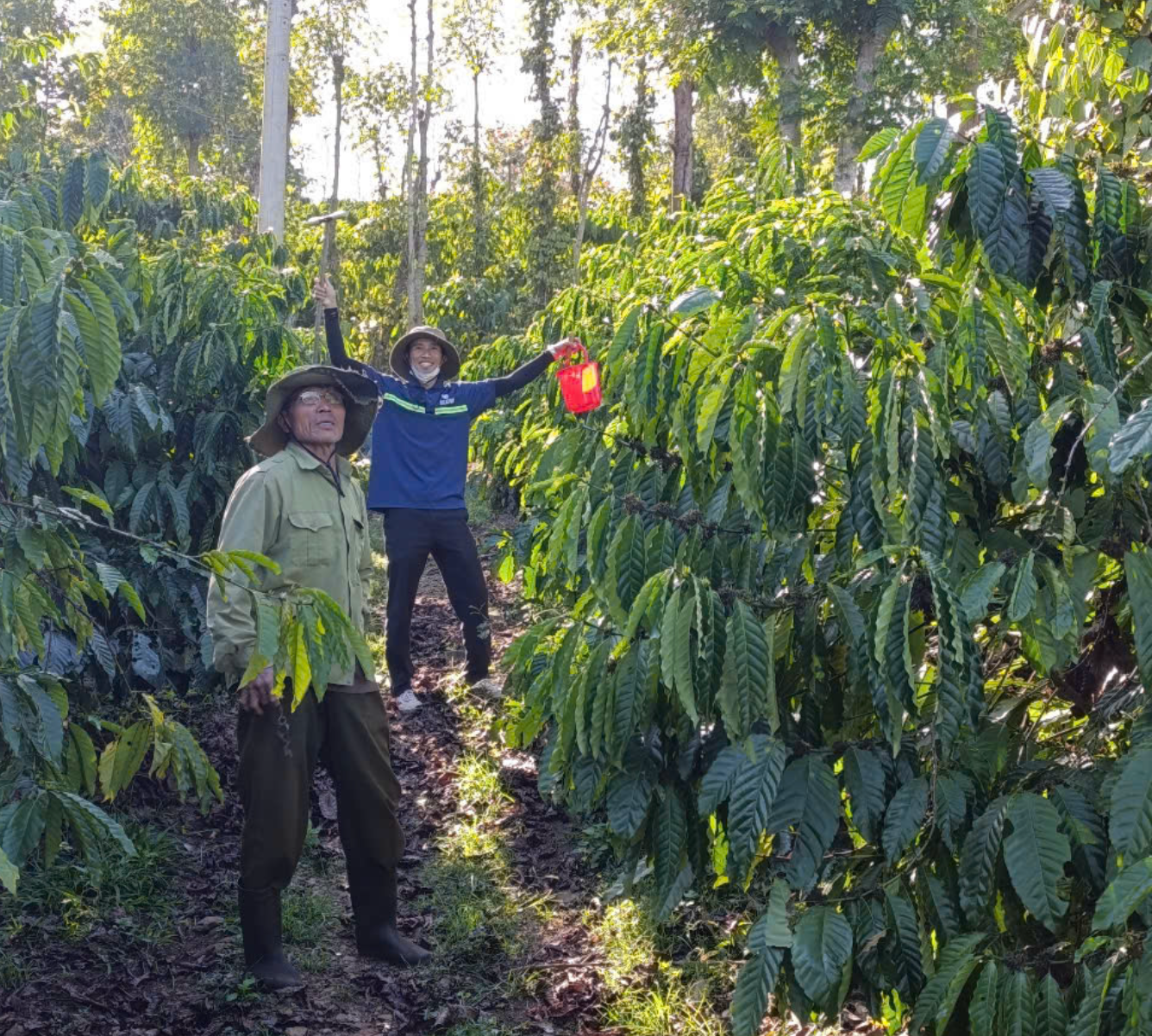
Farmer training is a key part of our sustainability work. Over the past season, farmers have been participating in training sessions on Good Agricultural Practices (GAPs), equipping them with knowledge on sustainable and responsible farming practices. These workshops are interactive spaces where farmers share their experiences. More than 1,500 farmers joined interactive workshops covering composting, fertilizer use, water and weed management, Integrated Pest Management (IPM) and shade tree cultivation. These practical trainings help farmers apply these initiatives directly in their fields and strengthen resilience at both farm and community level.
Another area of focus is conversion of input use from chemical fertilizers to organic composts. In order to reduce chemical fertilizers over time and to further reduce carbon emissions, coffee farmers in the region have learned to produce compost from coffee processing waste. So far, 347 farmers from one partner-led project and another 150 from a second initiative are now equipped with the materials to convert coffee husk waste from Robusta Natural processing into organic fertilizer. Farmers can add this organic compost to their coffee trees to help nourish soil, increase yields and potentially improve quality. Together, they have already produced more than 3,000 metric tons of compost.
Over the past year, farmers received 47,000 forest and fruit tree seedlings. These plantings are not only helping diversify local landscapes but also household income through fruit and timber production.
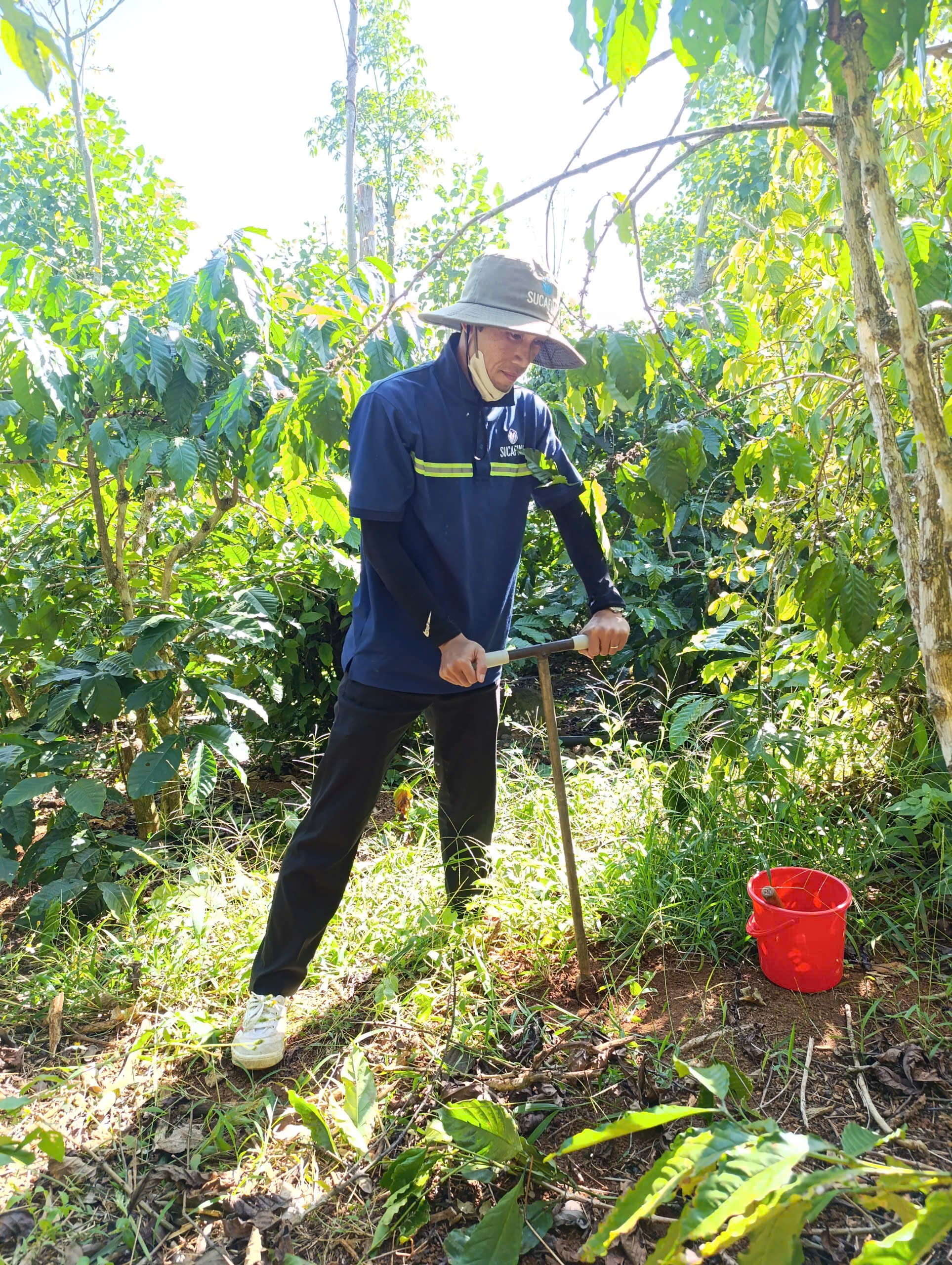
Our team is driving soil and carbon initiatives forward. We have collected 475 soil samples and are using the results to give farmers tailored fertilizer recommendations that cut costs, maintain yields and lower emissions. At the same time, we are mapping carbon footprints across partner projects and calculating results that will shape future reduction strategies and support regulatory compliance.
Looking Ahead
With favorable weather, improved farming practices and continued investments, the 2025/26 harvest is expected to be stronger in both volume and quality compared to last year.
If you are interested in learning more about our Vietnam supply chain or booking coffee from Vietnam, reach out to your trader!