From the Lab, News
Monday, October 6, 2025
Meet Kudrath Majid Kyama: Quality Supervisor at Cotacof
Our Sucafina Quality Control (QC) teams are the heart and soul of our coffee selection process – they’re the ones cupping, calibrating, collecting data and making sure we’re delivering the best coffees possible. In this contribution to our ‘Meet our QC Team’ series we touched base with Kudrath Majid Kyama, Quality Control Supervisor at Cotacof (Sucafina in Tanzania).

With roots in coffee farming and a background in food science, Kudrath Majid Kyama, Quality Control Supervisor at Cotacof (Sucafina in Tanzania), shares the challenges of auction cupping and how her role connects quality assurance, calibration and client needs.
This article at a glance:
- During peak season, Kudrath can cup as many as 600 samples in a week ahead of the Tanzanian Coffee Board auction!
- Cotacof has a newly built lab in Mbinga, closer to coffee’s source and thus increasing efficiency.
- Kudrath lets us in on the secret to nailing that sweet, delicate Korongo profile every time.
What are your main roles as a Quality Supervisor?
We deal with all inbound samples purchased from various suppliers. We prepare samples for destination that go to clients. Our role is to make sure the quality from our suppliers matches the quality expectations of the client we sell coffee to.
You were recently selected for a program connected to the World Food Forum. Can you tell us more?
Yes, the World Food Forum is held by the United Nations, specifically through the Food and Agriculture Organization (FAO). I applied for a one-year global program where participants meet to discuss food systems, development and policy.
I'm a food scientist by profession, and I felt it was aligned with my background and expertise. I was one of the only 20 selected participants from Tanzania representing our country globally.
We meet with international delegates on a shared platform to review and develop food-related policies, always with a view toward sustainability and the long-term impact of global food systems.
The most interesting part for me has been collaborating with other changemakers. It’s helped me learn more and gain new insights from youth across the world.
How did you get into coffee?
I was born into a family of coffee. My dad is a coffee farmer. [With my background in food science], I have everything needed to work in coffee; plus, I really like coffee. I’ve been in the coffee industry professionally for around 2 years now.
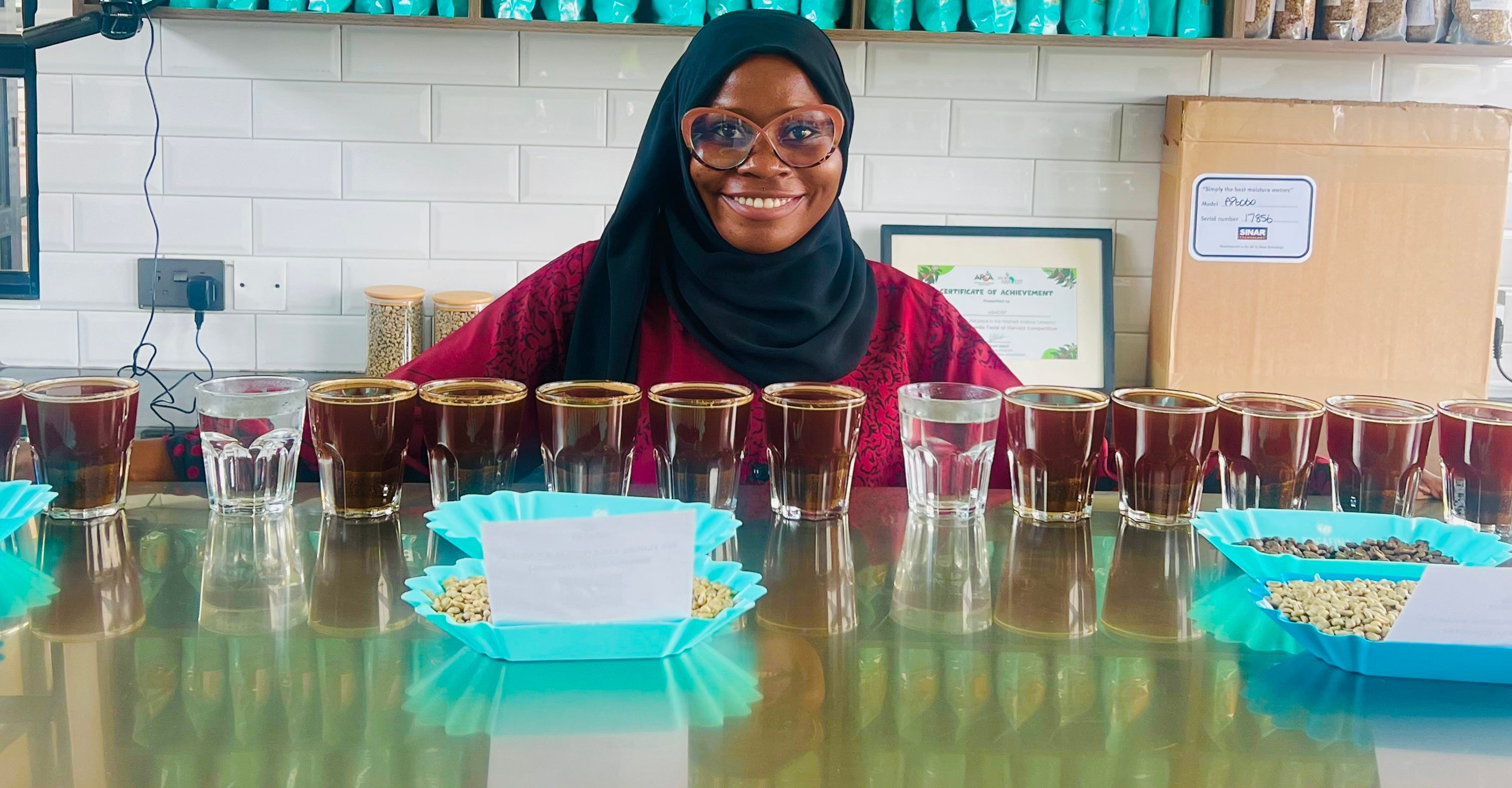
How do you calibrate with clients and ensure they’re purchasing coffee that suits their needs?
First of all, we need to know the client’s profile, the physical and sensory specifications they work with and what they can tolerate. When preparing coffee for a client, we have to know what they like. We make sure that every step of the process – processing, preparing, tasting, is well-monitored with no deviation.
In terms of calibration, we work with the destination teams to make sure we’re aligned. For example, we calibrate with Franciska in Antwerp, Jessica in Australia or Walter in Geneva when cupping, and then they send us the same samples. We cup them here and compare results to see how calibrated we are, then have discussions about alignment.
With clients, calibration usually happens when they share pre shipment sample (PSS) results. For example, we cup the coffee internally and might say it has good acidity. Then when the client cups it and either approves or rejects, they send their cupping notes. Approval means we’ve met their expectations. But when there’s a rejection, that’s when I know we’re not calibrated yet, and we investigate it more closely with the client.
What about cupping Auction coffees? What does auction look like in Tanzania, and how do you handle the volume during peak season?
We have two ways of purchasing coffee. One is direct export, buying directly from suppliers, and the other is through auction, managed by the Tanzania Coffee Board. Every farmer or supplier has the authority to take their coffee to auction. Exporters like us participate weekly as buyers.
Before the auction, we receive a pre-auction catalog of all the coffees that will be sold, which we analyze in advance. When we go to the auction, we already know the quality and profile of, say, Lot 14 – we’ve cupped it and we’re ready to decide if it fits our needs.
Auction cupping can get intense during peak season. We used to receive all the auction coffee samples from different regions at our main office lab in Dar es Salaam. We’d receive catalogs on Mondays with up to 600 lots to cup before Thursday’s auction. That meant analyzing all the samples and sharing results with the trading team in time for them to make decisions. It requires time management and planning.
Now, it’s much more manageable. We’ve built a second lab in Mbinga, which is the main arabica producing region in Tanzania. That means auction coffees from that region can be cupped directly rather than all being sent to Dar es Salaam. This has made the process much more efficient.
What is the biggest challenge and/or reward of your job?
The biggest challenge for me is receiving a client claim. It's also an opportunity to see where we need to improve. While it’s challenging, it pushes us to be better.
The biggest reward is receiving a new client. I get so excited because it means I can calibrate with someone new, to learn their preferences, their palette and how to work with them.
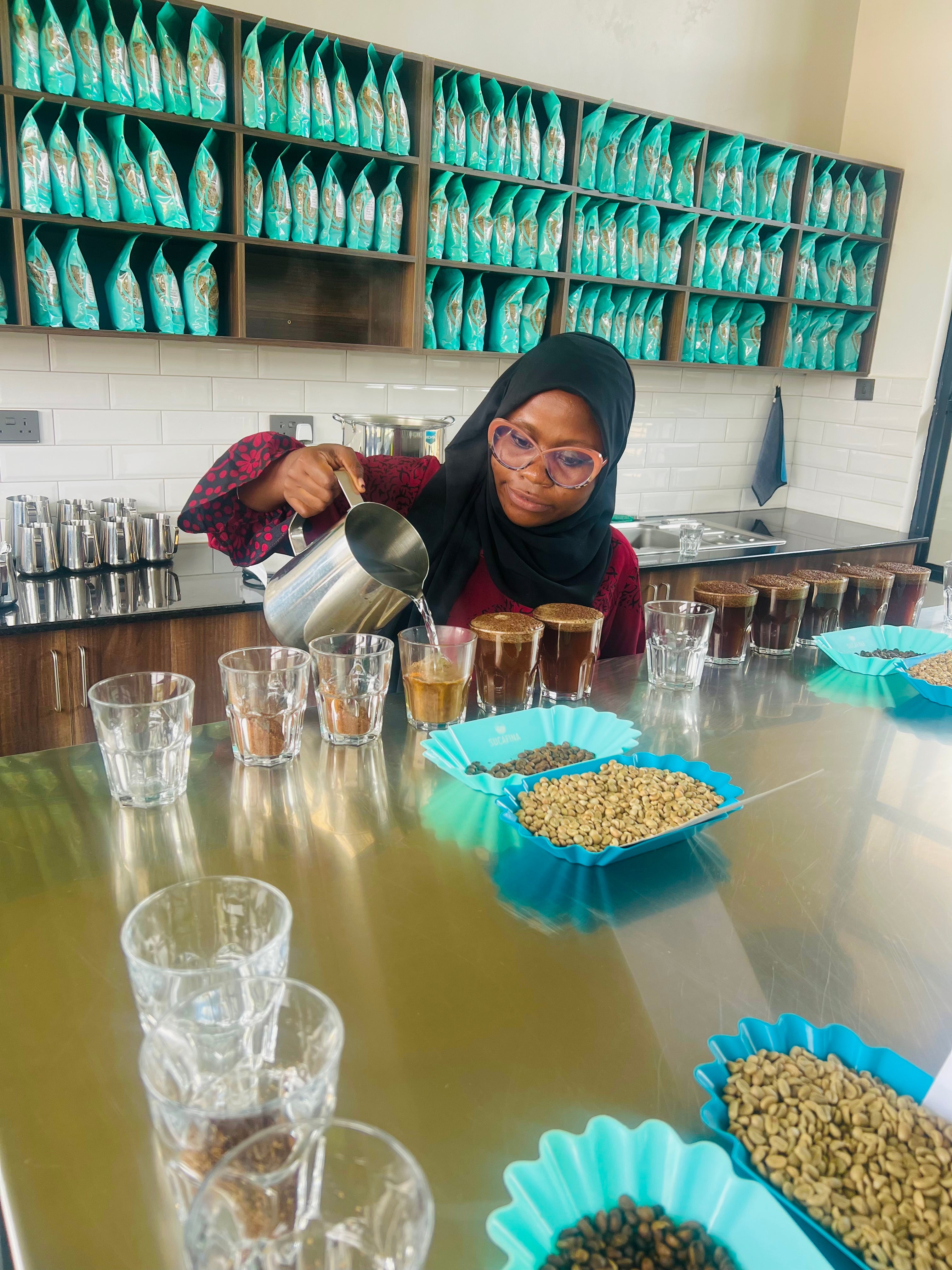
What flavor attributes do you think make Tanzanian coffee really stand out? Why should people get excited about TZ coffee?
Tanzanian coffee is extremely sweet. It also has fruitiness, like strawberries, berries, peaches, [along with the typical] nut and cocoa notes. That [combination] really makes Tanzanian coffee appealing. And when you’re drinking it, you’ll experience a long, sweet finish and aftertaste.
How does Korongo get made? How do you select coffees to go into that blend and keep it consistent?
Korongo isn’t just a blend. It’s a microlot sourced directly from AMCOS cooperatives that are part of our Loyalty Program. We support, pre-finance and work closely with these groups. From the start, Korongo is monitored in the field by our sustainability team. They visit farmers to ensure traceability and provide training in good harvesting, hygiene and storage practices.
Every stage – production, processing and supply chain – is carefully controlled. Korongo coffees are special. Even the packaging is distinct: Korongo gets a distinct logo to set it apart.
Selection begins with physical and sensory evaluation. Korongo must have zero primary defects and fewer than five secondary defects. Moisture content must fall between 9.5% and 12%. On the sensory side, we look for full, smooth body, not medium body. Acidity should be sweet and medium, not sharp. Flavor-wise, we look for fruity notes – strawberry is common – strong fragrance and aroma.
Consistency is critical. When we’re ready to approve a Korongo lot for shipment, we cup 10 cups. All 10 must be balanced, clean, uniform, sweet and full-bodied.
What advice would you give to someone wanting to pursue a career in coffee quality?
Coffee is a valuable commodity. It connects you to the world. You’re connected worldwide with people, and with consumers who are drinking coffee.
What’s your go-to morning brew?
Coffee with milk. I prefer Korongo, but it’s not easy to source because it’s a microlot. I would drink it every day if I could. When you brew Korongo, the whole office smells like chocolate, strawberries, milk, everything. It’s a very nice coffee.
What are your thoughts about integrating automation tools/AI into the QC process/lab?
Right now, coffee is based on human judgment and sensory evaluation. But having a standardized device that can give calibrated answers is very useful and makes the market more consistent. It’s a very good thing.
Curious about Tanzanian coffee’s sweet, fruity profile, or what it takes to cup 600 lots in a week? Get in touch with our team to learn more about Korongo, auction sourcing or quality operations in East Africa.